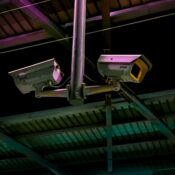
Why CCTV Alone Isn’t Enough: The Case for Integrated Security Systems
Walk into almost any business today and you’ll spot a camera mounted somewhere near the entrance. CCTV has become the default security purchase: visible, relatively affordable, and reassuring to point to when a client or board member asks “what are we doing about security?” The problem is that a camera only records. It doesn’t decide, intervene, or stop anything. Real protection comes from what happens around the footage – the people watching it, the rules governing who gets in, and the systems that tie everything together. Businesses that treat CCTV as the whole solution are often left exposed precisely where it matters most.
The CCTV Illusion
Cameras create a comforting illusion of control. A wall of monitors looks like security in action, but footage by itself is a record of what already happened, not a barrier to what’s about to happen. Unless someone is actively watching a feed in real time – and most aren’t – a camera’s main value after an incident is evidence, not prevention. By the time anyone reviews the tape, the intruder is gone, the package is stolen, or the unauthorized visitor has already walked the premises.
This gap matters because it changes what businesses should actually expect from CCTV. It’s a deterrent and an investigative tool, not a guard, a gatekeeper, or a decision-maker. Treating it as more than that leaves the front door open in every sense that counts.
The Human Element Cameras Can’t Replace
Footage doesn’t ask questions. A guard, receptionist, or monitoring operator does. They notice the visitor who seems nervous, the delivery person without a matching ID, the resident’s guest who doesn’t quite match the description on file. That judgment – built from training, context, and accountability – is what turns surveillance into actual security.
This is also where many security programs quietly fail. Cameras get installed, but the people responsible for acting on what they see aren’t given clear procedures, proper training, or the tools to verify identity quickly and confidently. A guard staring at ten monitors with no structured way to flag or respond to something unusual is functionally just another camera.
The Procedural Gaps: Access Control and Verification
Cameras observe; they don’t authorize. Without a clear, enforced process for who is allowed in, when, and why, footage simply documents the failure after it’s already occurred. This is where access control becomes the real backbone of a security system: pre-approved visitor lists, time-bound entry codes, identity verification at the point of entry, and a clear chain of accountability for every person who crosses the threshold.
This matters across very different settings. A corporate office needs to know that the person badging in at 11 p.m. is supposed to be there. A retail warehouse needs proof that a delivery driver matches the manifest. A gated residential estate needs a way to confirm that the person at the gate was actually invited by the resident they claim to be visiting – and a record of that approval that doesn’t depend on a guard’s memory or a handwritten logbook. In each case, the camera captures the moment; the access control process determines whether that moment should have happened at all.
What Integration Actually Looks Like
An integrated security system connects three layers so they reinforce each other instead of operating in isolation:
Surveillance provides visibility and a verifiable record. Access control governs who is permitted to enter, and under what conditions, before a camera ever needs to capture anything unusual. Human response – guards, staff, or monitoring teams – acts on both, with clear procedures for verification, escalation, and incident handling.
When these layers are connected, a suspicious event doesn’t just get recorded; it triggers a response. An unrecognized visitor doesn’t just appear on a screen; they’re checked against an access list before being let through. A guard isn’t relying on memory or guesswork; they’re working from a system that gives them the information they need at the exact moment they need it. Digital tools — visitor pre-registration, time-limited access codes, role-based permissions for staff and security personnel – make this kind of integration realistic to maintain, even for smaller teams without a large security budget.
The Business Case
Layered security isn’t just about stopping bad actors; it’s about reducing liability, improving accountability, and making incidents easier to investigate when they do occur. A camera alone gives you a video clip and a lot of unanswered questions. An integrated system gives you a video clip, a record of exactly who was authorized to be there, a timestamped log of how entry was granted, and a clear account of how staff responded – all of which matters enormously to insurers, to legal teams, and to the people relying on that business to keep them safe.
The cost of getting this wrong tends to surface only after something goes wrong: a break-in with no usable access trail, an unauthorized visitor who somehow made it past the front desk, a liability dispute with no documentation to fall back on. The cost of getting it right is comparatively small – clear procedures, the right verification tools, and a system that connects surveillance to action.
Conclusion
CCTV will always have a place in a security strategy, but it was never designed to carry that strategy alone. The businesses with genuinely strong security are the ones that pair cameras with disciplined access control and well-trained, well-supported people -turning a passive recording device into part of an active, accountable system. If your security program is still just a camera and a hope that nothing happens, it’s worth asking what the other two layers of that system should look like.